You want to know what tough actually means in a luxury car? Not tough like it survived a gentle fender bender. Not tough like the door handles didn’t rattle after 2 years. like commercial operators ran it as a taxi, a fleet vehicle, or an airport car service and drove it to 250,000 miles before they sold it. Tough like the engine was designed with tolerances so generous that Toyota or Nissan or Mercedes knew it would outlast the body it was sitting in. Tough like the people who own these things refuse to sell them no matter what you offer. That kind of tough in a luxury car for under $12,000.
Today on Auto Nexus, I’m going to show you four luxury vehicles that the market has no idea how to price correctly because the market thinks old luxury car means money pit. And I’m going to show you exactly why that assumption is dead wrong on these four specific machines.
A full-size V8 flagship whose owner drove it to 262,000 miles and still has it listed on Carfax right now. A body-on-frame V8 luxury SUV built on the same mechanical foundation as one of the most proven truck platforms in American history. A Mercedes-Benz from the last era before the brand got addicted to turbocharged complexity and a Toyota-built body-on-frame V8 luxury SUV that fleet operators ran into the ground and couldn’t kill.
Four vehicles, four completely different stories. One conclusion, the used luxury market doesn’t understand what toughness actually costs right now.
Subscribe to Auto Nexus. Let’s get into it.
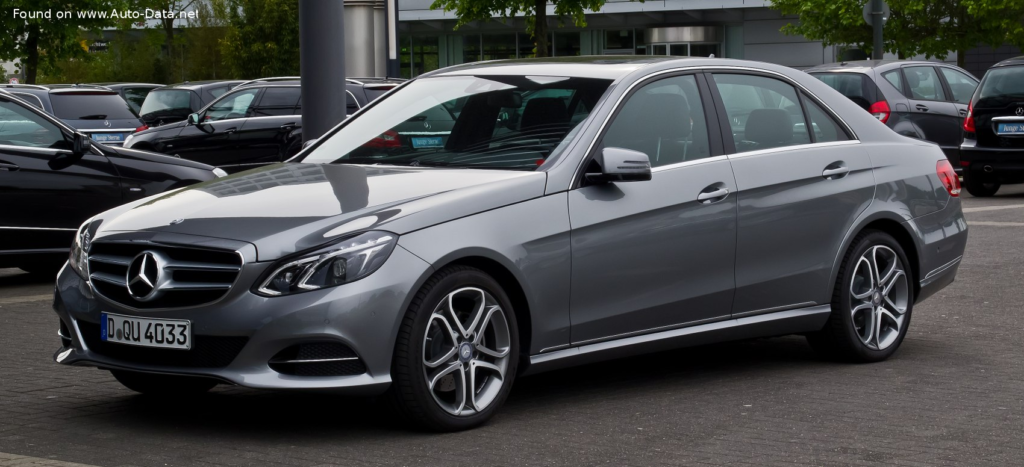
Car number four, Mercedes-Benz E350 W212.
I want to start with a confession that the used car market is not making.
Honestly, there are two completely different Mercedes-Benz ownership experiences. There’s the ownership experience of a maintained, documented Mercedes from the right generation. Smooth, sophisticated, genuinely luxurious, and far more reliable than the brand’s reputation suggests.
And there is the ownership experience of a neglected Mercedes from the wrong generation. A rolling bill generator that punishes ignorance without mercy.
The buyers who had the second experience created the reputation. The buyers who found the first experience are the ones who won’t stop talking about their E-Class at dinner parties.
The W212 E350 is the right generation. Let me explain why.
The Mercedes-Benz E350 W212 chassis from 2010 to 2012. A fully loaded W212 E350 left the dealership between $51,000 and $58,000 brand new. Today, clean, documented examples sit between $8,000 and $13,000.
Someone absorbed over $43,000 in depreciation so you don’t have to.
And what they left behind is the last generation of Mercedes-Benz E-Class built before the brand made a decision that changed everything about its ownership economics. That decision was the universal adoption of turbocharged forced induction across the entire model lineup.
The 3.5-liter naturally aspirated V6 in the 2010 to 2012 E350 produces 302 horsepower. No turbocharger, no intercooler, no forced induction complexity waiting to generate bills as the mileage climbs.
This is the last generation where you could buy a full-size Mercedes E-Class with a naturally aspirated engine. And that distinction is the entire durability argument because what turbochargers do to a luxury car’s maintenance bill at 100,000, 150,000, 200,000 miles is the reason the Mercedes reputation for expensive ownership exists.
Without the turbo, a large portion of that reputation simply doesn’t apply.
This engine was deployed across multiple Mercedes platforms in this era. Parts are available everywhere. Any Mercedes-familiar independent mechanic knows this engine without a manual in front of them.
And the 7G-Tronic automatic transmission on maintained examples with documented fluid service shifts with a smoothness that still outperforms gearboxes in brand-new vehicles at this price point.
The W212 is the last Mercedes E-Class that automotive journalists could call genuinely restrained in its complexity.
The interior reflects the last era when Mercedes wasn’t trying to compete with Tesla on touchscreen square footage. Physical controls for everything important. A center console that places every frequently used function exactly where your hand falls naturally. Genuine leather, real wood trim. The kind of ergonomic confidence that comes from decades of refining the same fundamental approach rather than reinventing it for every generation.
Dual-zone climate, heated and ventilated seats, blind spot monitoring, parking sensors front and rear, a Harman Kardon audio system on higher specifications, and the Airmatic air suspension on equipped examples, which delivers a ride quality that still has no equivalent at this price in the used market.
When it works correctly, this suspension system turns road imperfections into suggestions rather than impacts.
What you must verify before you buy:
The Airmatic suspension is the central inspection item on any W212. Have a Mercedes specialist verify the compressor function and all four struts before purchase. A failing compressor runs $600 to $1,000 to replace. Use it as a negotiating point, not a reason to walk away.
The rear subframe bushings on high-mileage examples can wear. A known issue that costs $400 to $700 at an independent shop and significantly improves handling feel.
Verify the 7G-Tronic transmission fluid was changed on schedule with the correct Mercedes-specific fluid.
The spark plug service interval on the V6 is 40,000 miles. Verify it’s current.
A Mercedes specialist with STAR diagnostic access runs around $200 for a pre-purchase inspection. Non-negotiable on this car.
Target the naturally aspirated V6 exclusively. Any W212 with a turbocharged engine is a completely different ownership conversation.
The reason this car costs $10,000 today is Mercedes’s reputation as a brand applied without distinction to a specific generation that does not deserve the penalty.
The W212 E350 with the naturally aspirated V6 is not the money pit its successors became. It is the last version of something Mercedes has not built since, and that is your $43,000 opportunity.
But what I’m about to show you next operates in a completely different engineering category. Not German precision, not European refinement, but American brute-force V8 architecture in a body-on-frame platform that fleet operators trusted to do the one thing European luxury flagships have never been able to do reliably: last forever.
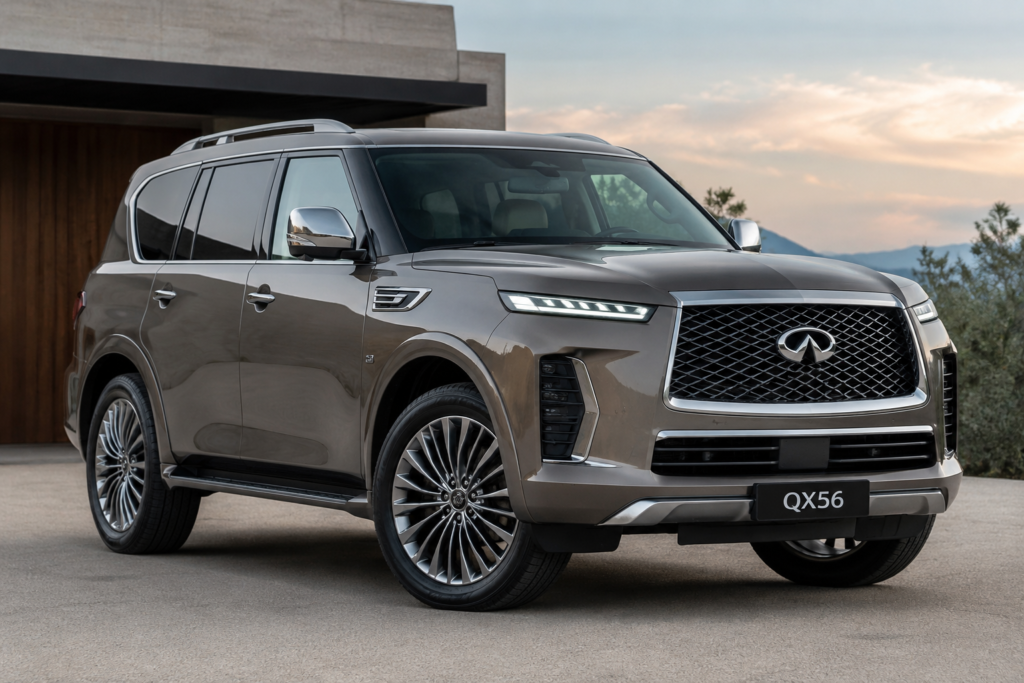
Car number three, Infiniti QX56.
There is a specific type of durability that body-on-frame construction delivers that no unibody luxury vehicle can replicate. Not handling precision, not cabin refinement, not aerodynamic efficiency, structural durability under sustained real-world load.
The kind of durability that allows a platform to absorb 200,000 miles of commercial use, carrying passengers, towing, running daily, without the cumulative stress that destroys unibody alternatives over the same period.
The Infiniti QX56 was built on that platform and the market has completely forgotten it exists.
The Infiniti QX56 from 2008 to 2010 had an original MSRP between $51,000 and $58,000 depending on specification. Today, KBB places clean examples between $6,000 and $11,000.
Someone absorbed over $45,000 in depreciation so you don’t have to.
And what they left behind is a full-size body-on-frame luxury SUV built on the same F-Alpha platform as the Nissan Titan. The truck platform Nissan engineered for genuine heavy-duty commercial applications before wrapping it in Infiniti luxury specification.
The VK56DE, a 5.6-liter naturally aspirated V8 producing 320 horsepower and 393 lb-ft of torque.
This is not a V8 Infiniti engineered for luxury application and hoped would survive commercial use. This is a V8 Infiniti took from the Titan pickup truck, a platform built for construction fleets, towing services, and hard commercial work, and installed in a luxury body.
The architecture came first, the luxury came second. And that order of engineering priorities is exactly why this engine appears in documented high-mileage fleet examples in a way that German luxury SUV powertrains simply don’t.
No turbochargers, no direct injection carbon accumulation concerns, no cylinder deactivation system with documented failure modes. A naturally aspirated V8 with the same parts philosophy as Nissan’s most proven commercial truck engine.
Timing chain, not belt. No catastrophic maintenance event waiting at 100,000 miles.
Oil changes, transmission fluid service, differential fluid service. That is the complete major maintenance conversation on this engine.
Towing capacity: 8,000 pounds.
Genuine three-row seating with enough second-row space that passengers don’t need to apologize for being tall.
A running board step height that makes entry natural rather than athletic.
And a cabin specification from Infiniti that brought genuine leather, premium audio, and full luxury appointments to a platform engineered to last decades.
One owner documented their 2008 QX56 to 312,000 miles on a Nissan Titan owner forum, noting that the V8 had never been opened. The odometer was the only thing that told the story of how many miles that engine had seen.
That documentation exists because the engine family is that proven.
What you must verify before you buy:
The timing chain on the VK56DE can develop rattle on high-mileage examples where oil change intervals were extended. Listen for any metallic noise at cold startup. A rattle that persists beyond 10 seconds is a negotiation point.
Verify oil change history is documented with synthetic oil at correct intervals.
The third-row seat mechanism can develop stiffness at high mileage. Test it fully before purchase.
Check the front and rear differentials. Fluid service is frequently deferred on used examples.
The air suspension on equipped examples is the same verification point as any luxury vehicle of this era. Compressor and strut function should be confirmed by a Nissan-familiar independent shop. Budget around $150 for the inspection.
The 5-speed automatic transmission requires fluid service verification. A $100 drain-and-fill transforms shift quality on examples where it has been deferred.
The reason this V8 body-on-frame luxury SUV costs $8,000 today is simple and completely wrong.
The Cadillac Escalade, Lincoln Navigator, and Lexus LX carry the cultural recognition that commands used market premiums regardless of engineering.
The QX56 does the same mechanical work, follows the same platform philosophy, delivers similar V8 architecture and genuine three-row luxury specification with a badge the market never assigned the same premium.
That badge difference is your $45,000 opportunity.
But what I’m about to show you next takes everything the QX56 delivers—body-on-frame construction, naturally aspirated V8, genuine luxury specification—and adds the engineering variable that changes the long-term ownership conversation entirely:
The word Toyota on the manufacturing door where it was built.
Stay with me.
Car number two, Lexus GX 460.
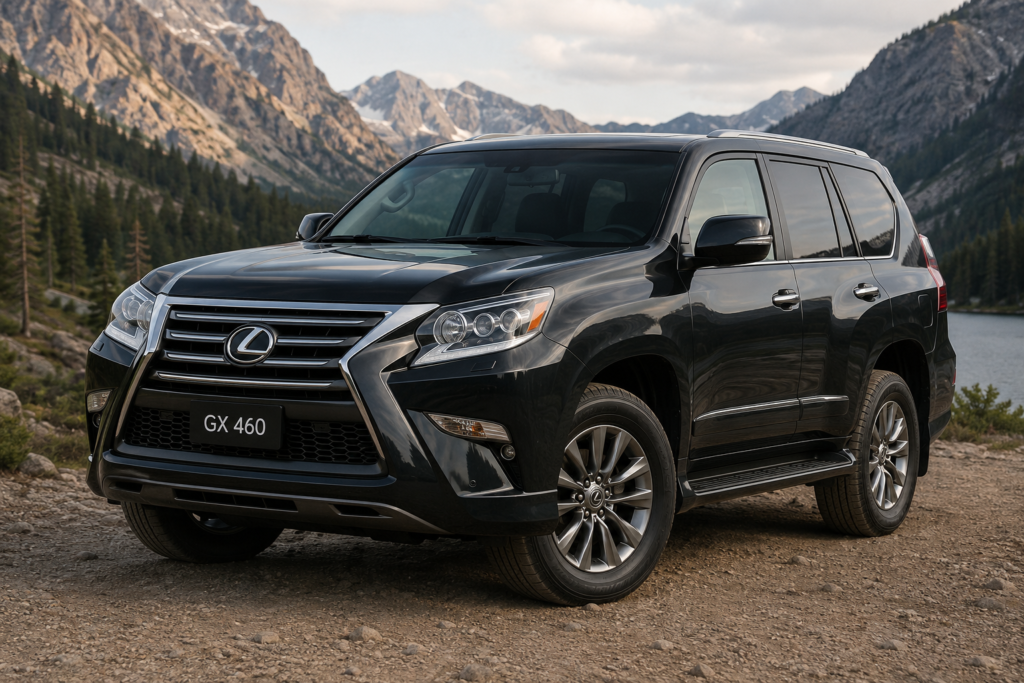
The automotive press has a specific way of describing the Lexus GX 460 that tells you everything you need to know about this vehicle’s position in the used market.
They call it boring.
Not unreliable. is overpriced. Not mechanically flawed.
Boring.
Because it sits in the Lexus lineup as a body-on-frame V8 luxury SUV in an era when every other manufacturer in this segment moved to independent suspension and turbocharged four-cylinders.
Toyota looked at what the market was doing and decided the buyers who needed a body-on-frame V8 needed it to work for 20 years and didn’t need it to handle like a sports sedan.
That decision produced the GX 460.
And the used market, chasing the flashier alternatives, left it at prices that make no sense for what it actually is.
The Lexus GX 460 from 2010 to 2013 carried an original MSRP between $52,000 and $60,000.
Today, KBB and current market data confirm examples between $12,000 and $18,000. Higher than anything else on this list and still one of the most rational value propositions in the used luxury SUV segment.
Someone absorbed over $40,000 in depreciation so you don’t have to.
And what they left behind is a Toyota Land Cruiser Prado underneath a Lexus body. The same platform Toyota has used in some of the most demanding commercial and off-road applications on Earth.
The 1UR-FE, a 4.6-liter naturally aspirated V8 producing 301 horsepower.
This is the same engine family Toyota deployed in the Land Cruiser 200 Series and the Lexus LS 460. A platform designed with one specific engineering mandate:
Run indefinitely under sustained load in conditions that would destroy less conservatively engineered powertrains.
No turbocharger. No forced induction of any kind. A timing chain Toyota designed to outlast the vehicle around it.
An oil consumption rate on maintained examples that owners consistently describe as essentially zero.
Fleet operators, hotel car services, executive transportation companies, long-haul private transport businesses chose the GX 460 specifically because it combines the mechanical durability of the Land Cruiser platform with Lexus interior specification.
These are operators who make rational financial decisions about what will keep running and what will generate bills.
They chose the GX 460 because it kept running.
And documentation of 200,000, 250,000, even 300,000-mile examples in fleet service is not exceptional. It is the expected outcome of Toyota engineering applied to this platform.
Kinetic Dynamic Suspension System standard on all GX460 examples continuously adjusts each shock independently based on road conditions and body movement.
Crawl Control, Multi-Terrain Select, a center differential locking system, a full-time four-wheel-drive transfer case with low range.
In a Lexus.
With Mark Levinson premium audio, semi-aniline leather, heated and ventilated front seats, and heated second-row seats.
That combination—genuine off-road capability built on Land Cruiser architecture wrapped in full Lexus luxury specification—exists in the used market for around $13,000 because the market decided it was boring.
Boring is your $45,000 discount.
What you must verify before you buy:
The timing belt on the 1UR-FE requires replacement at 90,000 miles. Verify service history documents it. If not completed, budget $800 to $1,200 and use it as negotiating leverage.
The rear air suspension on equipped examples will eventually need attention. Same verification point as every luxury vehicle with this system.
Third-row access is tight for adults. Test it in person to confirm it meets your actual usage requirements.
The transfer case and front differential fluid should be verified. Frequently deferred service on used examples. Around $150 combined prevents a $2,000 repair.
A Lexus-familiar independent inspection: $150. Non-negotiable.
The reason the GX 460 costs $13,000 today is the most honestly correct and simultaneously irrational explanation in the used luxury market.
The press called it boring. Buyers listened.
And the Land Cruiser Prado wearing a Lexus badge, with Mark Levinson audio, semi-aniline leather, and a naturally aspirated V8 Toyota built to run forever, sat quietly at prices that make every rational analysis of its mechanical reality look like a math error.
It is not a math error. It is an opportunity.
And there is one more car on this list. The one that closes everything. The most extreme version of that same opportunity.
A full-size V8 flagship. A 4.6-liter Toyota V8. Rear-wheel drive. Active noise cancellation. Mark Levinson audio.
Cars.com shows a documented example with 262,000 miles listed for sale right now with a running engine because the owner who ran it that far knows exactly what they have.
Available from $8,493.
That is the price on Edmunds today.
Let me show you what that buys.
Car number one, Lexus LS460.
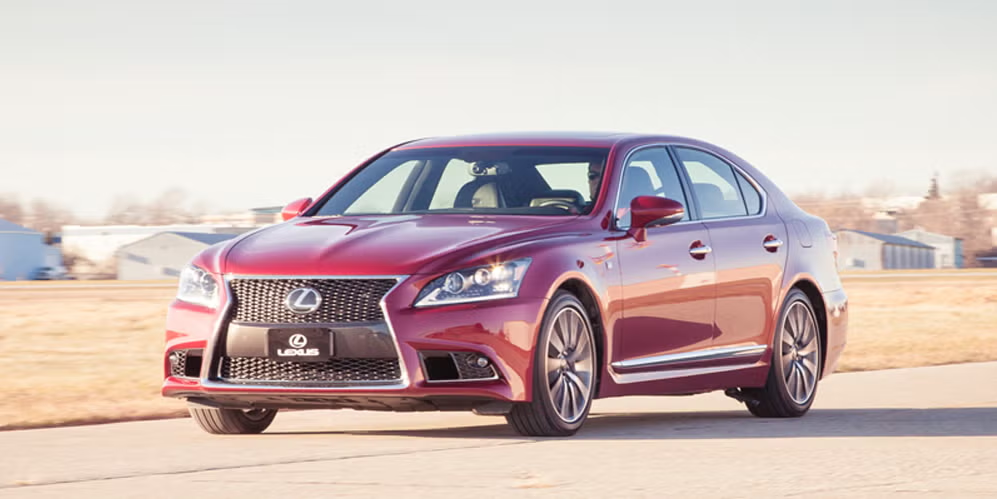
I want to give you a real number before I say anything else.
Carfax has a 2007 Lexus LS460 listed right now with 262,000 miles. It is for sale. The 4.6-liter V8 is running. The car is drivable.
That is not a car at the end of its life.
That is a car demonstrating what happens when Toyota engineers a V8 with a target of indefinite service and then builds it correctly the first time.
The Lexus LS460 from 2007 to 2009. Edmunds confirms used prices from $8,493 to $25,779 depending on year, mileage, and specification.
A 2009 LS460 AWD with 139,000 miles listed around $10,950 on KBB this week.
Original MSRP when new: $64,000 to $72,000 depending on specification. The long-wheelbase version reached $72,000.
Someone absorbed over $55,000 in depreciation so you don’t have to.
And what they left behind is the car Toyota launched with this statement to the automotive press:
The LS460 took over 4 million hours of engineering development before the first production example rolled off the line.
They were not trying to build a competitive flagship.
They were trying to build the most technically sophisticated production automobile in history.
And they wanted the engineering to last long enough that the people who bought it would remember how it felt the day they drove it new.
The 1UR-FSE V8, the same 4.6-liter naturally aspirated architecture in the GX 460, producing 380 horsepower and 367 lb-ft of torque.
An 8-speed automatic transmission Toyota built entirely in-house because they didn’t trust any external supplier to meet their standards for a vehicle at this specification level.
The smoothest naturally aspirated V8 in production at the time it launched.
Toyota benchmarked idle vibration by placing a glass of water on the dashboard. If the water moved, the engine was not refined enough.
That is not marketing copy. That was the documented engineering standard.
The result is an engine that produces 380 horsepower with an idle so smooth first-time passengers ask whether it’s running.
An 8-speed transmission that shifts with a precision many vehicles costing three times as much today cannot match.
And a naturally aspirated architecture with no turbocharger, no forced induction, no variable displacement complexity. Just displacement, compression, and engineering margins built so conservatively that 262,000 miles on a Carfax listing is a data point, not an outlier.
Active noise cancellation using microphones and speakers to neutralize road noise in real time.
Mark Levinson 19-speaker, 450-watt audio system.
A self-parking system, pre-collision braking, adaptive suspension, heated and cooled front seats with memory, rear seats with power recline and ottoman footrest extension.
Active noise cancellation combined with a Mark Levinson audio system in a car available from $8,493.
That specification should not exist at that price. But here we are.
What you must verify before you buy:
Target 2008 and 2009 examples for the updated air suspension calibration.
The 2007 model year had documented software concerns with the VGRS steering system. Verify any 2007 purchase specifically for recall status at NHTSA.gov.
The air suspension requires full verification. Every corner, compressor function, overnight level check. If the car sits uneven after eight hours parked, there is a strut or compressor concern.
Budget $600 to $1,200 for compressor service if needed on an otherwise correct car.
The timing chain is a major advantage on this engine. No scheduled belt replacement, no catastrophic failure mode waiting at a mileage interval.
Coolant service if not documented: around $150 at any Toyota-familiar independent shop.
The VGRS variable gear ratio steering on Sport editions requires STAR diagnostic access for full verification. Budget around $200 for inspection on Sport examples.
On standard LS460 examples, any Lexus-familiar independent inspection at around $150 covers the complete checklist.
The reason the LS460 costs $9,000 today is the most honest explanation of depreciation in the entire used luxury market.
The LS500 followed with a turbocharged V6 and more modern technology. The market followed the new model code.
And the LS460 sat quietly on lots while buyers paid full prices for turbocharged alternatives without asking whether what they were leaving behind had stopped being extraordinary.
It hadn’t.
There is a 2007 example on Carfax right now with 262,000 miles. The running. Still for sale. Still built the way Toyota built it in 2007: to last so long the owner would remember how it felt the first day.
For $9,000, you can find out exactly what that feels like.
Four vehicles. Four completely different engineering philosophies.
One common truth the used luxury market has not correctly priced:
Toughness is not a feature.
It is an engineering decision made at the beginning of the design process. Before the leather is chosen. the audio system is specified. Before the badge is attached.
And the four cars on this list had that decision made correctly.
The Mercedes E350 W212 for the buyer who wants German engineering from the last generation before forced-induction complexity became the brand’s default setting.
Naturally aspirated V6. Genuine luxury. Around $10,000.
Verify the suspension. Verify the transmission fluid. Walk away from anything turbocharged.
The Infiniti QX56 for the buyer who wants body-on-frame V8 luxury at $8,000. The Nissan Titan engine in an Infiniti body with the platform durability fleet operators trusted when they needed something that would not stop running.
The Lexus GX460 for the buyer who wants the Land Cruiser Prado platform under a Lexus badge, full-time four-wheel drive, naturally aspirated V8, Mark Levinson audio, and Toyota’s documented commercial-grade durability at around $13,000 because the press called it boring and the market listened.
And the Lexus LS460 for the buyer who understands that a 4.6-liter Toyota V8 with active noise cancellation, Mark Levinson 19-speaker audio, and documented 262,000-mile examples still running costs $9,000 today because the market followed the new badge and forgot to ask whether what it left behind had stopped being extraordinary.
It hadn’t.
Every one of these requires the same thing:
Complete service documentation.
A specialist inspection.
$150 to $200. Non-negotiable.
Walk away from anything without verifiable maintenance history.
Do that, and you drive home in something built to outlast the market’s memory of it.
If this video changed how you see what tough actually means in a luxury car, hit that like button. It costs you nothing and tells YouTube to show this to every buyer tired of paying new-car prices for turbocharged complexity they never asked for.
Subscribe to Auto Nexus.
Every single week, we find the engineering stories the market forgot and the prices that make them impossible to ignore.
Unloved. Underpriced. Built to last.
Waiting for you.
Buy smart, not by trend.
See you next time.