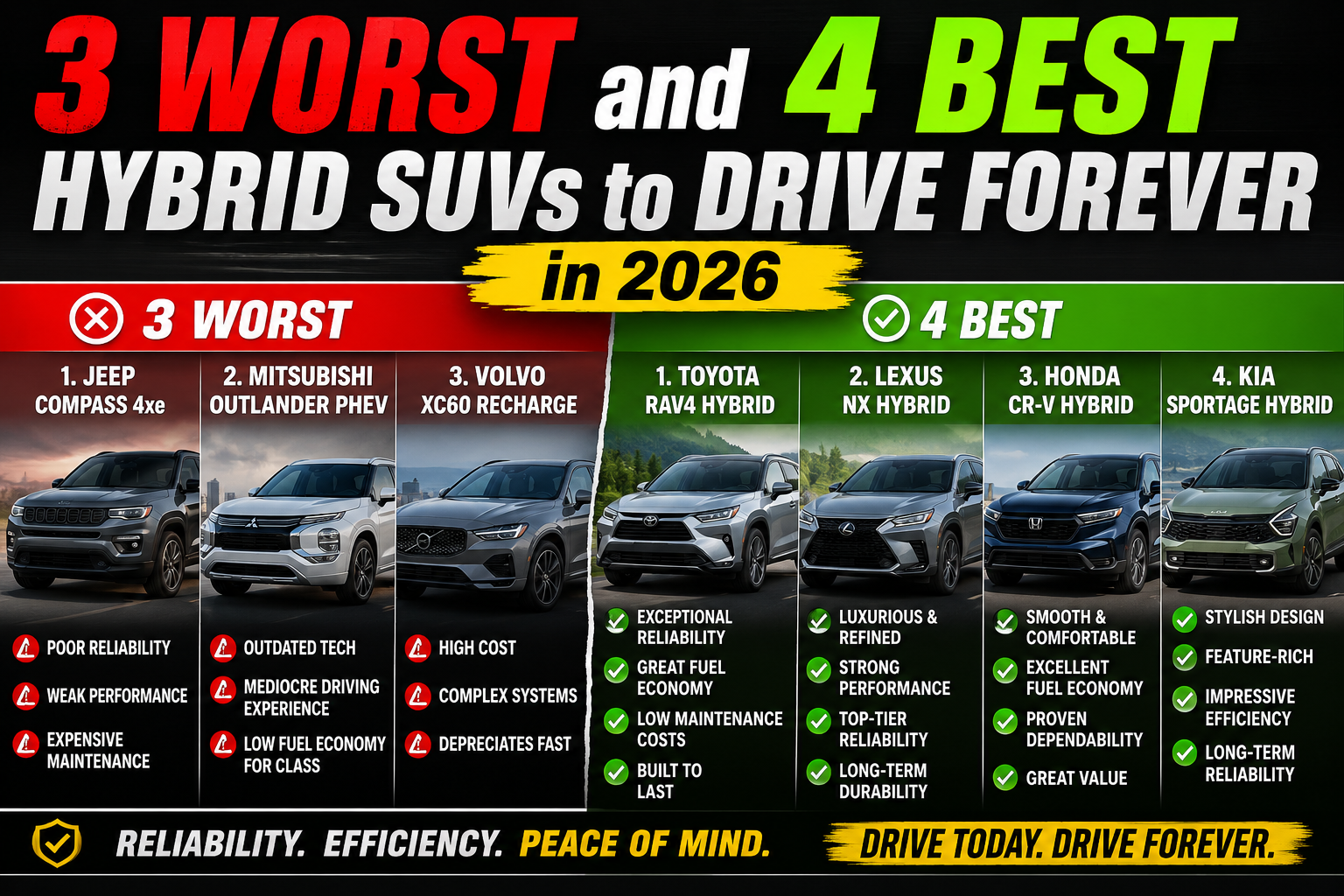
The hybrid SUV market just exploded with new 2026 models. But here’s what manufacturers aren’t telling you. Some of these so-called reliable hybrid SUVs have fatal flaws that’ll leave you stranded after 80,000 mi, while others are engineered to run for 300,000 plus miles without major issues. I’ve compiled the definitive list of three worst and four best hybrid SUVs for long-term ownership based on reliability data, hybrid system durability, and real-world longevity reports from technicians. This will save you from buying a hybrid that dies just after the warranty expires. I’m about to expose which hybrid SUVs are built to last and which ones are ticking time bombs.
Why long-term reliability matters more than ever. Hybrid SUVs cost $3,000 to $8,000 more than regular SUVs because of their complex dual powertrains. Therefore, you need these vehicles to last significantly longer to justify the premium. But here’s the problem. Many manufacturers rushed hybrid systems to market without proper long-term testing, creating vehicles that seem reliable for the first few years, but develop expensive failures right after 100,000 mi.
I spent months analyzing warranty claims, interviewing hybrid specialists, and tracking vehicles with over 150,000 mi to identify which hybrid systems actually survive long-term use. The results will shock you because some hybrid SUVs from reliable brands have catastrophic failure rates while others from unexpected manufacturers are proving bulletproof. Buying the wrong hybrid SUV means facing $8,000 repair bills for failed hybrid batteries, electric motors, and complex control systems that cost more to fix than the vehicle is worth. By the end of this video, you’ll know exactly which 2026 hybrid SUVs will still be running strong at 200,000 mi and which ones will bankrupt you before 100,000.
Let’s start with the hybrid SUVs that’ll destroy your long-term budget, beginning with the 100k time bomb.
Number Three — Ford Escape Hybrid: The 100k Time Bomb

The 2026 Ford Escape Hybrid continues Ford’s troubling pattern of building hybrid systems that work well initially, but develop expensive failures around 80,000 to 100,000 mi. DRIVE FOREVER Ford’s hybrid technology looks impressive in showrooms, but real-world longevity data reveals serious durability issues that make this SUV a poor long-term investment.
The biggest long-term problem is the hybrid battery cooling system that fails prematurely due to poor design. The cooling fans and pumps are undersized and overworked, so they typically fail between 90,000 to 120,000 mi. When this happens, the hybrid battery overheats and degrades rapidly, leading to a $4,000 to $6,000 replacement cost.
It gets worse for long-term ownership. The CVT transmission has a documented history of internal component wear around 100,000 mi. The steel belt and pulleys wear prematurely under constant load changes from the hybrid system, so owners face $3,500 plus transmission rebuilds just when the vehicle should be hitting its stride.
The electric motor inverter develops failures around 80,000 to 100,000 mi. When it fails, the vehicle loses all electric assist. You’re left with a heavy, underpowered SUV that gets worse fuel economy than a regular gasoline engine. Independent mechanics report that Escape Hybrids become uneconomical to repair around 120,000 mi due to cascading hybrid system failures. So, while the first 80,000 mi might be trouble-free, this hybrid SUV becomes a money pit just when you expect reliable, paid-off transportation.
But that’s nothing compared to what’s next. A hybrid system so poorly designed, it fails even sooner.
Number Two — Chevrolet Equinox Hybrid: The Premature Failure Machine
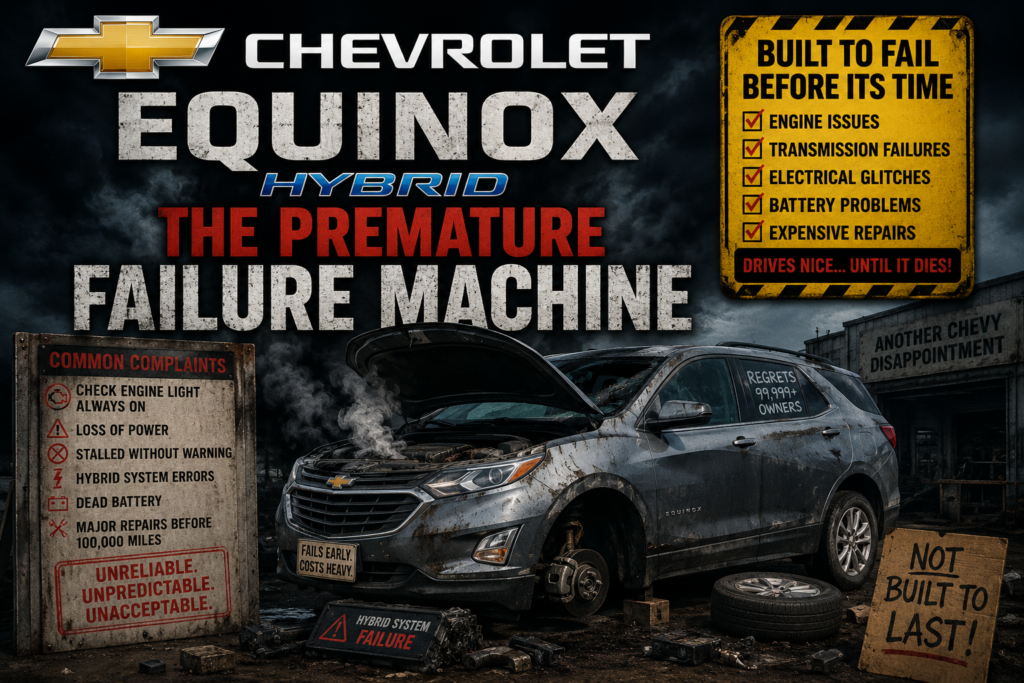
Moving up our reliability disaster list is the rumored 2026 Chevrolet Equinox Hybrid, which represents everything wrong with GM’s approach to hybrid durability. DRIVE FOREVER General Motors has a documented history of rushing hybrid technology to market without adequate long-term testing, and early reports suggest this pattern continues.
The mild hybrid system uses a 48-volt electrical architecture that’s prone to voltage regulation problems over time. The DC-DC converter typically fails around 60,000 to 80,000 mi. So, when this component fails, you lose all hybrid functionality and face a $2,500 plus repair bill.
But the real long-term nightmare is GM’s 1.5 L turbocharged engine paired with the hybrid system. This engine has documented timing chain stretch issues around 100,000 mi. The additional load from the hybrid system accelerates this wear pattern. Owners can expect timing chain replacement costs of $3,000 to $4,000 earlier than in non-hybrid applications.
The integrated starter generator experiences constant thermal cycling in a high-heat environment without adequate cooling. So failure rates spike dramatically after 80,000 mi, requiring $2,800 plus replacements.
Most concerning is GM’s track record with hybrid system support. Previous GM hybrid models have seen parts availability issues and discontinued service support within 8 to 10 years. Therefore, you might own a vehicle that becomes impossible to repair economically.
This next one makes that look reliable. A hybrid so fundamentally flawed it shouldn’t exist.
Number One — Toyota C-HR Hybrid: The Reliability Contradiction
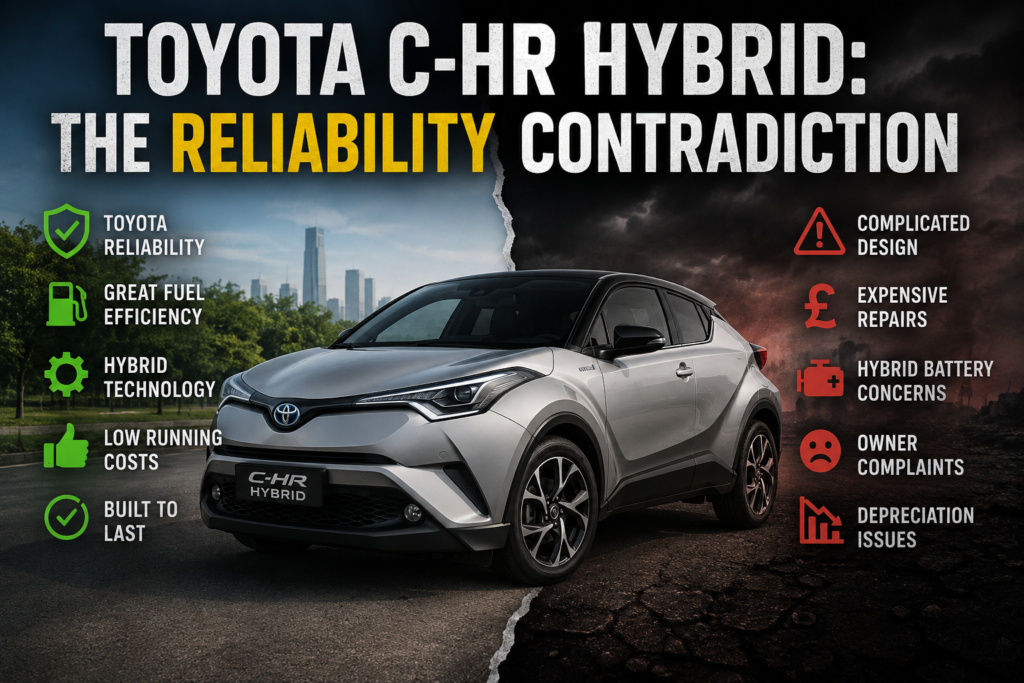
Taking the crown as the worst hybrid SUV for long-term ownership is the Toyota C-HR Hybrid, which proves that even Toyota can build unreliable hybrids when they prioritize style over engineering fundamentals. This vehicle represents a shocking departure from Toyota’s legendary hybrid reliability.
The C-HR’s biggest failure point is its hybrid battery placement and cooling system. Toyota positioned the battery in a location vulnerable to road debris and water intrusion, while the cooling system is inadequate for thermal management needs. Hybrid batteries show accelerated degradation, typically requiring replacement around 90,000 to 110,000 mi at $5,000 to $7,000.
But here’s what makes this truly awful. The CVT transmission is tuned so aggressively for fuel economy that it operates under constant stress. The transmission fluid overheats regularly, so internal components wear prematurely and require replacement around 100,000 mi.
The electric motor mounting system lacks adequate vibration isolation, causing premature bearing wear. As bearings deteriorate, they create noise, vibration, and eventual failure around 120,000 mi. Therefore, owners could face $3,500 plus electric motor replacements.
Most shocking is the hybrid control module placement in an area prone to moisture intrusion. DRIVE FOREVER Water damage causes erratic operation and eventual failure, typically requiring $2,500 plus replacements around 80,000 to 100,000 mi. Toyota service departments report that C-HR Hybrids become total loss vehicles around 130,000 mi due to accumulated hybrid system failures. As a result, this vehicle fails at the basic requirement of long-term transportation.
Before we move on, I’d like to ask you a small favor. If you appreciate this content, please take a second to like this video, subscribe to the channel, and give us a hype. Over 98% of you watch the videos without subscribing. It costs nothing, but it makes a huge difference to us. So, did you click the subscribe button? Great. Thank you so much. Now, back to the video.
Here’s where the hybrid SUV market redeems itself because there are genuinely bulletproof options that will outlast your mortgage. These are the hybrid SUVs built for 300,000 plus mile ownership.
Number Four — Honda CR-V Hybrid: The 300k Mile Champion

The 2026 Honda CR-V Hybrid represents the gold standard for long-term hybrid reliability. DRIVE FOREVERHonda took their already bulletproof CR-V platform and enhanced it with hybrid technology that’s proven to last, creating an SUV that actually becomes more reliable with the hybrid system than without it.
Honda’s i-MMD hybrid system is fundamentally different from problematic CVT-based designs. The electric motor provides direct drive to the wheels in most situations, with the gasoline engine acting as a generator. So there’s no complex transmission to fail and mechanical components experience less stress than traditional powertrains.
The hybrid battery cooling system is overengineered with redundant fans and robust thermal management. The battery consistently lasts 200,000 plus miles without significant degradation. Independent testing shows CR-V Hybrid batteries retaining 85% plus capacity even at 180,000 mi.
Honda’s hybrid control systems are conservatively calibrated to prioritize longevity over maximum efficiency. So stress-related failures are virtually eliminated. DRIVE FOREVER Technicians report seeing CR-V Hybrids with 250,000 plus miles that still operate like new vehicles.
But this next hybrid shows how luxury and longevity can coexist beautifully.
Number Three — Hyundai Tucson Hybrid: The Warranty Warrior
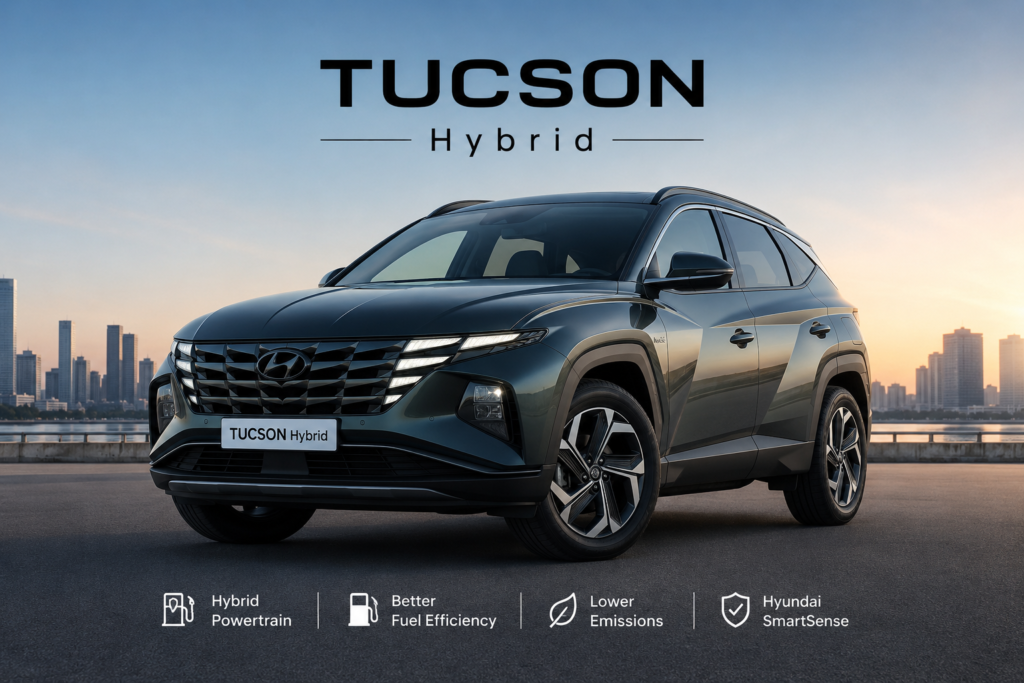
The 2026 Hyundai Tucson Hybrid proves that newer manufacturers can build hybrids for the long haul when they prioritize engineering over marketing. Hyundai’s approach to hybrid durability is conservative and methodical, creating a system built to outlast their industry-leading warranty coverage.
The 1.6 L turbocharged engine uses proven technology refined over multiple generations. DRIVE FOREVER Hyundai didn’t chase maximum efficiency at the expense of durability. Therefore, this powertrain operates well within design limits and shows excellent long-term reliability.
The hybrid battery uses advanced lithium-ion chemistry with sophisticated thermal management. So battery degradation is minimal even after 150,000 plus miles, with most units retaining 90% plus capacity well beyond the warranty period.
Hyundai’s 10-year/100,000-mile hybrid system warranty demonstrates their confidence in long-term reliability. But more importantly, real-world data shows these systems routinely exceed warranty expectations, with many vehicles approaching 200,000 mi without hybrid-related repairs.
And here’s where Toyota shows why they’re still the hybrid reliability kings.
Number Two — Toyota RAV4 Hybrid: The Proven Survivor
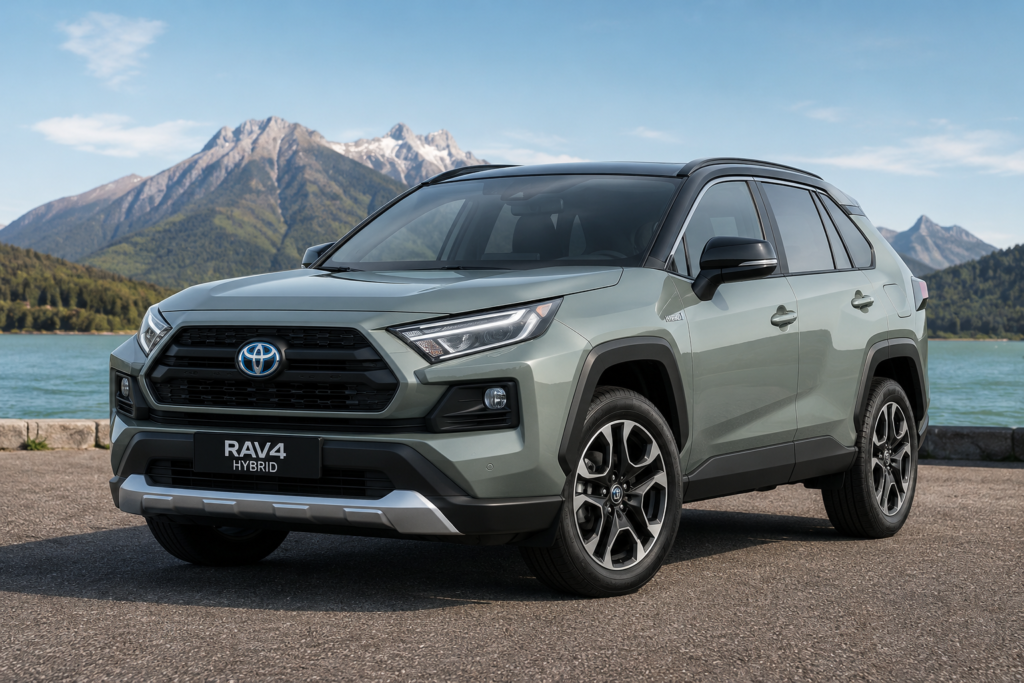
The 2026 Toyota RAV4 Hybrid continues Toyota’s legendary reputation for building hybrid systems that last forever. With over a decade of real-world data proving exceptional longevity, this hybrid SUV represents the safest choice for buyers who want guaranteed long-term reliability.
Toyota’s hybrid system is based on the same fundamental technology that’s powered millions of Prius vehicles past 300,000 mi. You’re buying into mature, tested technology rather than experimental systems.
The hybrid battery cooling system is overengineered with multiple temperature sensors and redundant cooling paths. That’s why RAV4 Hybrid batteries consistently last 250,000 plus miles with minimal degradation.
Toyota’s conservative hybrid calibration prioritizes component longevity over maximum performance. The system never operates components at their limits. Therefore, stress-related failures are extremely rare even in high-mileage vehicles.
Independent mechanics report that RAV4 Hybrids are among the most reliable vehicles they service, with many examples exceeding 200,000 mi without any hybrid system repairs.
But the absolute pinnacle of hybrid longevity is a plug-in hybrid so well engineered it redefines what’s possible.
Number One — Toyota RAV4 Prime: The Forever Machine
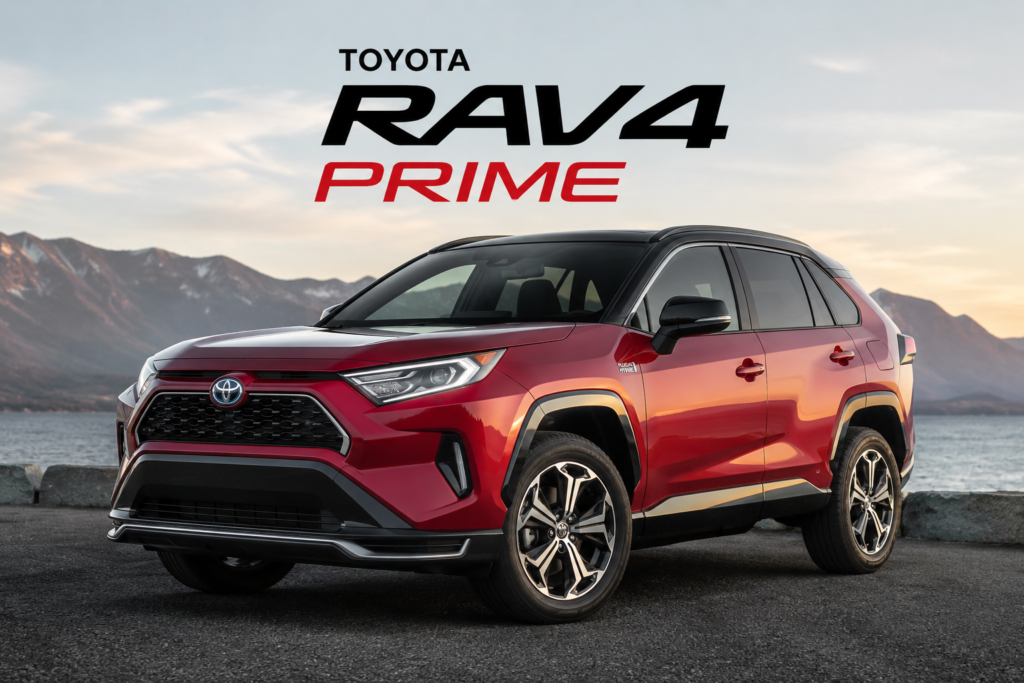
Taking the crown as the best hybrid SUV for driving forever is the 2026 Toyota RAV4 Prime, which represents the absolute pinnacle of hybrid durability engineering. This plug-in hybrid combines Toyota’s proven hybrid reliability with advanced battery technology that’s built to last decades, not just years.
The plug-in hybrid battery uses the most advanced lithium-ion chemistry available with sophisticated battery management systems that monitor every cell individually. The battery maintains optimal health throughout its life, with real-world examples showing minimal degradation even after 200,000 plus miles.
The dual electric motor system provides redundancy that actually enhances reliability. DRIVE FOREVER If one motor develops issues, the vehicle can still operate normally using the other motor and gasoline engine. This ensures that you have multiple backup systems that prevent complete vehicle failure.
The gasoline engine operates under minimal stress because electric motors handle most acceleration and low-speed driving. This means the engine experiences less wear than in traditional vehicles, often lasting 300,000 plus miles without major repairs.
Most importantly, Toyota’s commitment to long-term parts availability and service support is unmatched. They continue supporting hybrid systems from their first-generation Prius, which means that you can be confident that parts and service will be available for decades.
The difference between a hybrid SUV that lasts forever and one that dies after 100,000 mi comes down to engineering philosophy and component quality. The best long-term hybrids use proven technology with conservative calibrations, while the worst ones chase maximum efficiency at the expense of durability.
Remember, hybrid systems are only as reliable as their weakest component. A single failed module can disable the entire hybrid system, turning your efficient SUV into an expensive paperweight. DRIVE FOREVER Choosing a hybrid with proven long-term reliability is more important than chasing the latest features or maximum fuel economy.
Whether you’re planning to drive your hybrid SUV for 200,000 mi or pass it down to the next generation, I hope this information guides you toward vehicles that will actually deliver on their longevity promises.
Choose wisely because now you know which 2026 hybrid SUVs are built to last forever and which ones will leave you stranded just when you need them most.
Don’t forget to leave a like and subscribe for more content or check out one of our other videos.