The average price of a Nike lifestyle sneaker has climbed past $150. A basic pair of Nike Air Force Ones, a shoe designed in 1982 with technology from the Reagan administration, now retails for $120. The materials have not improved. The cushioning has not changed. The only thing that went up is the price. Meanwhile, five brands are sitting on the same shelves, using equal or better materials, backed by decades of actual engineering, and charging half the price. Sneaker Brands Nobody talks about them. The YouTube algorithm ignores them. Sneaker culture pretends they don’t exist. That changes today.
These are five cheap sneaker brands that everyone walks past, and every single one of them is a gold mine hiding in plain sight.
Number Five — Reebok Classic Leather
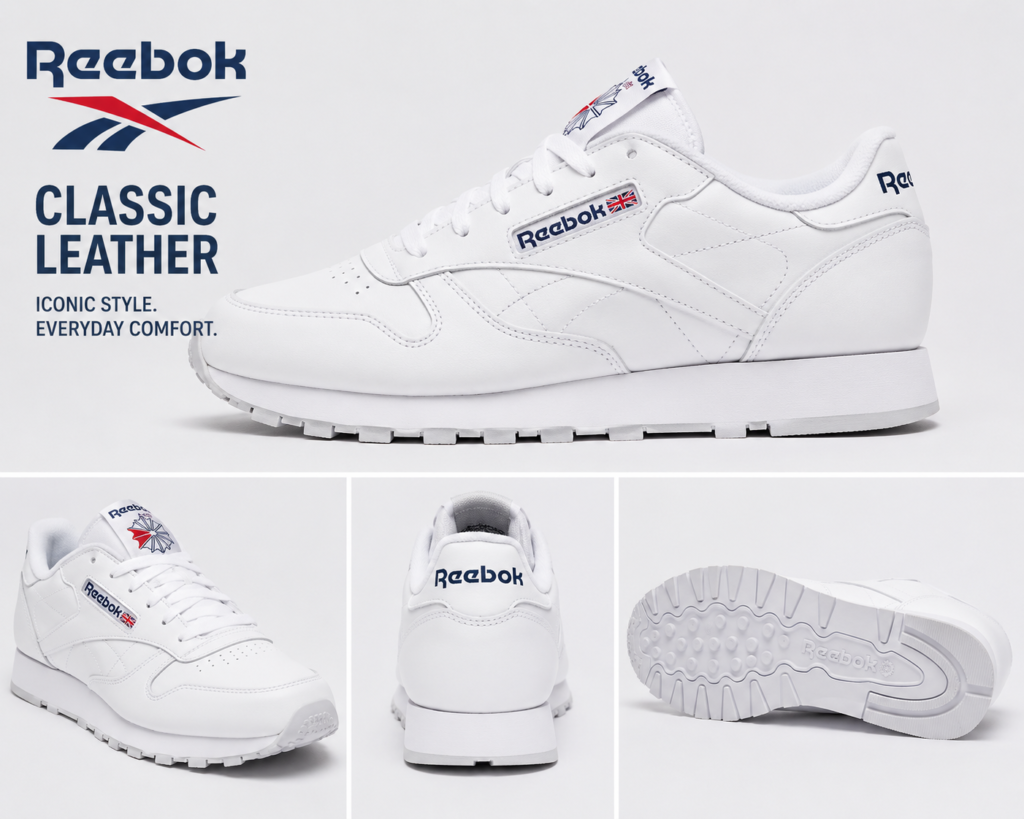
In 1983, inside a Reebok factory in Lancaster, England, engineers did something that no running shoe company had done before. They built a running shoe with a full-grain leather upper. Every competitor at the time — Nike, Adidas, and ASICS — were using nylon and mesh for their running uppers. Those materials were lighter, but they wore out faster, offered no structural support after the first few months, and looked visibly degraded within a year of regular use.
Reebok looked at those durability problems and went in the opposite direction. They took full-grain leather, a material traditionally reserved for dress shoes and work boots, and engineered it into a running silhouette. The Classic Leather launched at a price point that undercut the competition, and it sold in enormous volume throughout the 1980s and into the ’90s.
The shoe weighs 11.4 ounces. That is lighter than most leather shoes on the market today, including several Nike models that use synthetic materials. The leather upper molds to the specific contours of your foot over the first two to three weeks of wear, creating a custom fit that no synthetic shoe can replicate. The EVA midsole provides cushioning without the unnecessary bulk that plagues most modern sneakers designed to look impressive on a shelf rather than perform on your feet.
Today, the Reebok Classic Leather retails for around $75 to $85. That is 36% below the average price of a men’s sneaker in the United States. For context, the Nike Dunk Low, which uses a synthetic leather upper that cracks and peels after six to eight months, retails for $110.
You are paying $30 more for a shoe made with worse materials. That is what brand tax looks like in practice.
The silhouette on the Classic Leather is clean. It pairs with chinos, dark denim, and casual trousers. There is no oversized logo screaming for attention. No neon accents. No chunky sole trying to make a statement. It is a leather shoe that does its job and does it quietly.
The one legitimate drawback is the cushioning. The Classic Leather was designed in the early ’80s, and the midsole reflects that era. If you are on your feet for six to eight hours, you will want to swap in an aftermarket insole. A $20 pair of Superfeet or PowerStep inserts turns this into a different shoe entirely. Even with that added cost, you are still under $110 for a full-leather sneaker with upgraded cushioning that undercuts most Nike Dunks by $40 while giving you a shoe built with genuinely superior materials.
Number Four — Puma Suede
October 16, 1968. Mexico City. The 200-meter final at the Summer Olympics. Tommie Smith crosses the finish line in a world-record time of 19.83 seconds. On his feet are a pair of Puma running spikes. Minutes later, he stands on the gold medal podium, raises a black-gloved fist into the air, and creates one of the most photographed moments in Olympic history.
The cameras captured everything: his face, his fist, and his shoes.
That relationship between Puma and athletic performance stretches back even further. The company was founded in 1948 by Rudolf Dassler in Herzogenaurach, Germany. His brother Adolf founded Adidas across town the same year after the two split their original shoe business in one of the most bitter family feuds in corporate history.
While Adidas went on to dominate European football, Puma carved out territory in track and field and basketball. The shoe that cemented Puma in American culture came in the early 1970s when Walt Frazier of the New York Knicks started wearing a custom version of the Puma Suede on the hardwood floor at Madison Square Garden.
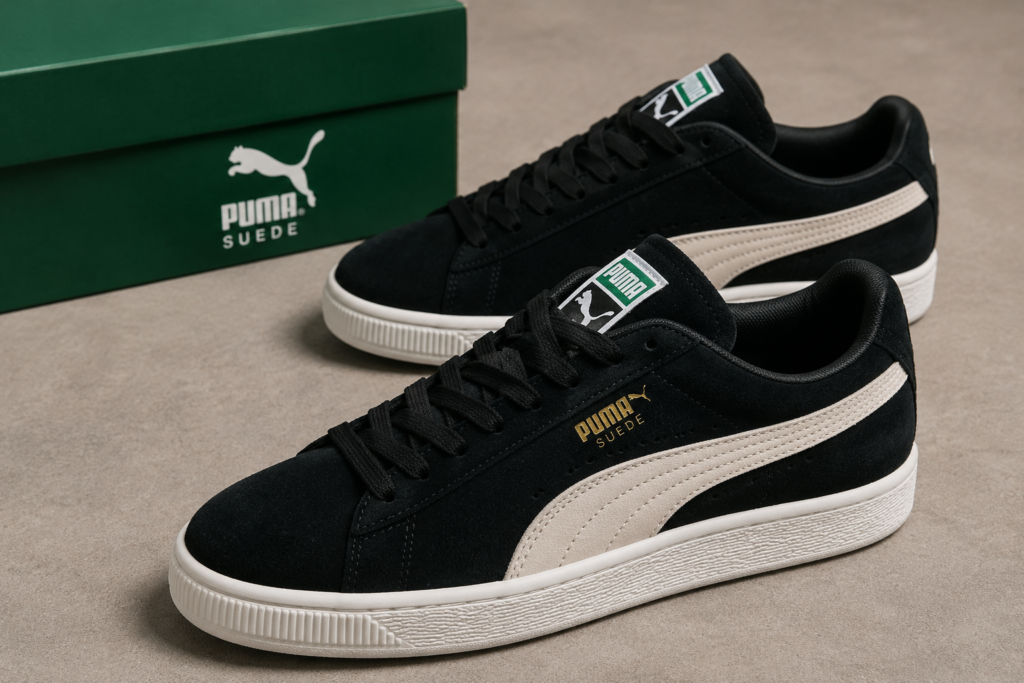
The modern Puma Suede retails for around $70. The upper is genuine suede, not the synthetic imitation material that brands like Nike use on their sub-$120 models. Run your thumb across the surface of a Puma Suede, then do the same on a Nike Dunk Low. The difference in material quality is obvious to anyone who has ever touched real leather.
The rubber outsole is thick and durable. Owners regularly report getting two to three years of consistent daily wear before the sole shows significant degradation. Try getting that kind of lifespan out of a pair of Nike Roshes.
The construction is simple by design. There is no unnecessary technology crammed into the shoe to justify a higher price. The suede upper, the rubber sole, the padded tongue and collar — that is the entire shoe. And that simplicity is exactly why it lasts.
One legitimate concern with the Puma Suede is the width. The shoe runs narrow, particularly in the toe box. If you wear a wide shoe, ordering a half size up is the standard recommendation. There is also a break-in period of about a week where the suede needs to soften and conform to the shape of your foot.
At $70, you are getting a shoe with more heritage, better materials, and a cleaner silhouette than most sneakers at twice the price.
Number Three — New Balance 574
This is the shoe that deserves more attention than any other model on this list.
The New Balance 574 was originally designed as a hybrid road and trail running shoe. The last — the foot-shaped mold the shoe is built around — is wider than the standard last Nike and Adidas use. That is not an accident. New Balance has offered multiple width options on this model for decades, ranging from narrow all the way to extra wide.
For men with broader feet, and that includes a significant percentage of men over 50 whose feet have naturally widened with age, this is one of the only lifestyle sneakers on the market that actually accommodates their foot shape without forcing them to buy an oversized length just to get enough room in the toe box.
That matters more than it sounds. Wearing a shoe that is too long in order to get enough width creates heel slippage, reduces stability, and accelerates the breakdown of the midsole because your foot is not sitting where the cushioning was designed to support it.
New Balance solved that problem by building the same shoe in multiple widths. Sneaker Brands It sounds obvious. Almost no other brand does it at this price point.
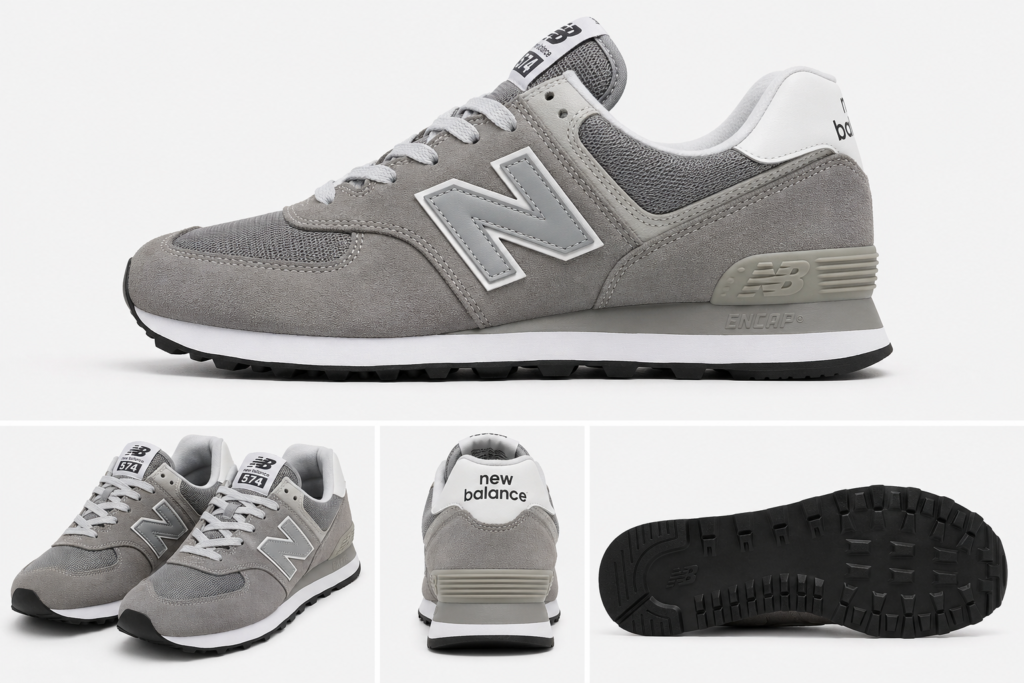
The midsole uses New Balance’s ENCAP technology. Sneaker Brands That is a polyurethane rim surrounding an EVA foam core. The polyurethane provides structure and durability. The EVA provides cushioning and shock absorption. Together, they create a midsole that holds up far longer than the compressed foam slabs that Nike and Adidas use in their budget models.
Those foam midsoles flatten out and lose their cushioning within six to eight months of daily wear. You can feel the difference. In the first month, the shoe feels soft and responsive. By month six, you are walking on a slab of compressed rubber that provides almost no impact protection.
The ENCAP system in the 574 resists that compression because the polyurethane rim holds the foam in shape, preventing it from pancaking under your body weight over time.
The retail price of the New Balance 574 is around $100, but this shoe goes on sale constantly. Joe’s New Balance Outlet regularly stocks it for $50 to $60, which is a 40–48% discount off retail.
New Balance also manufactures select models in the United States at factories in Norridgewock, Maine, and Lawrence, Massachusetts. The Made in USA 574 costs more, typically around $200, but it exists as an option for buyers who want American-made footwear with premium materials, including Horween leather.
The colorway selection on the 574 is enormous. Dozens of options range from muted earth tones to classic navy and gray combinations that have been in production for over a decade. The shoe works with everything from cargo shorts to dress-casual slacks.
It does not try to be flashy. It tries to be correct.
Number Two — ASICS Gel-Lyte III
In 1990, a designer named Shigeyuki Mitsui sat inside the ASICS research and development facility in Kobe, Japan, studying a mechanical problem that runners experienced with traditional sneaker construction: tongue slide.
The flat, single-piece tongue used in conventional shoes shifts to one side during movement, creating pressure points and discomfort that worsen over hours of wear. Every brand knew about this problem. Nike knew. Adidas knew. Reebok knew. None of them fixed it.
Mitsui did not accept it.
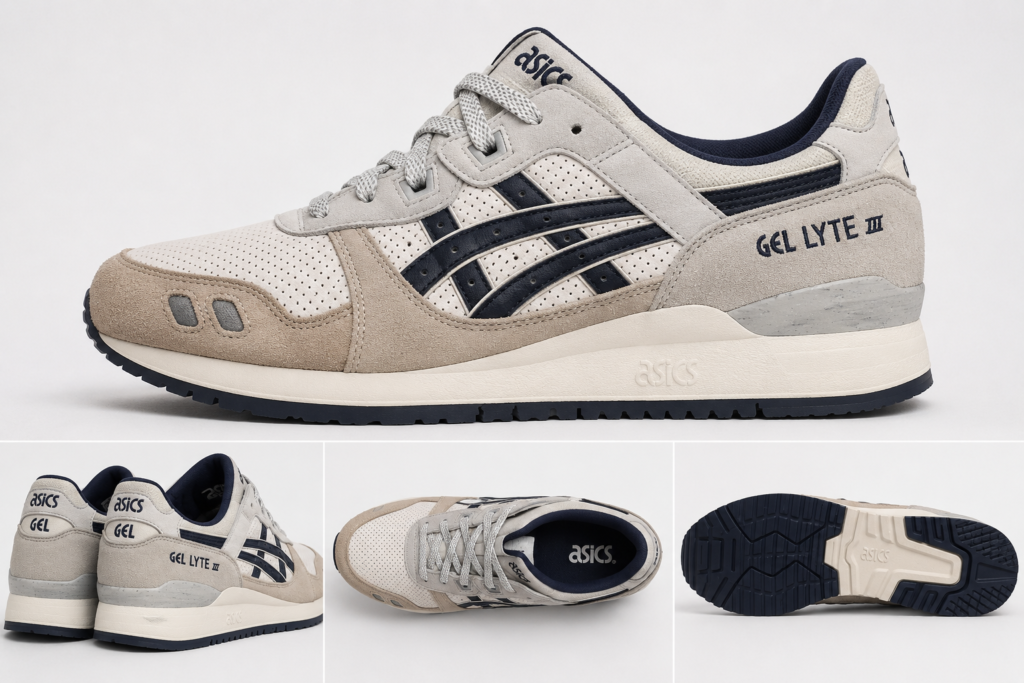
His solution was the split tongue. He divided the tongue into two separate pieces, each attached to opposite sides of the shoe’s opening. When laced, the two halves overlap and lock into position. The tongue cannot slide left or right. It stays centered on the top of the foot regardless of how you move, how far you walk, or how many hours you wear the shoe.
That single innovation would have been enough to justify the shoe. Sneaker Brands But ASICS also loaded the Gel-Lyte III with their proprietary GEL cushioning system.
The critical difference between GEL and the foam systems used by Nike and Adidas is compression memory. Foam compresses under repeated impact and stays compressed. GEL does not behave that way. The silicone compound returns to its original shape after each impact, retaining its shock absorption properties for the functional life of the shoe.
The Gel-Lyte III retails for around $120. That is the highest price on this list, but consider what it competes against. The Nike Air Max 90 retails for $140. The Adidas Ultraboost starts at $190. The Jordan 1 Mid sits at $125.
ASICS matches or beats all of them on materials, cushioning technology, and build quality while costing less than most of them.
The fit is true to size. The leather and suede overlays on the upper are genuine, not synthetic.Sneaker Brands The rubber outsole uses a herringbone traction pattern that grips noticeably better on wet surfaces than the flat rubber Nike uses on many lifestyle shoes.
If you have ever finished a long day on your feet and noticed the tongue of your shoe had shifted completely to one side, the Gel-Lyte III eliminates that experience permanently.
Number One — Saucony
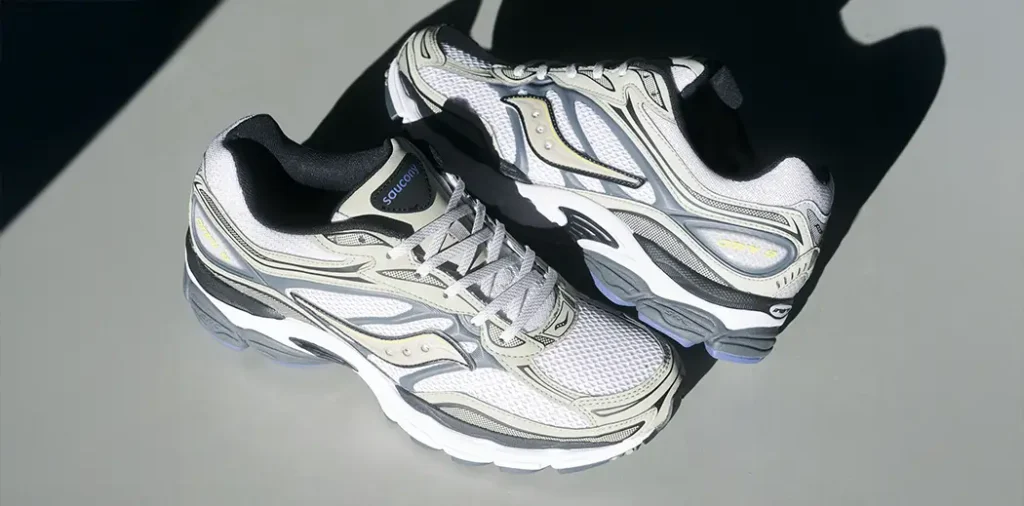
In 1898, four businessmen in Kutztown, Pennsylvania, founded a shoe company on the banks of Saucony Creek. That makes Saucony the oldest running shoe brand in the United States — older than Nike by 76 years, older than Adidas by 51, and older than New Balance by eight.
And yet, if you walked into most shoe stores in America today and asked 10 customers to name five sneaker brands, almost none of them would say Saucony.
That is not because the shoes are inferior. It is because the company made a deliberate decision about where to spend its money.
The brand nearly disappeared multiple times throughout the 20th century. It changed ownership repeatedly, passed from company to company like an asset that nobody knew how to value properly. But through all of that corporate reshuffling, the shoes never got worse.
The Jazz Original, Saucony’s most recognizable model, retails today for $65 to $75. The upper combines suede and nylon in a construction that breathes better than full leather while maintaining structural integrity across months of wear.
The midsole is EVA foam with a padded collar and a triangular lug outsole designed for grip on both pavement and light trail surfaces. The shoe weighs next to nothing. Sneaker Brands It looks and feels like it should cost significantly more than it does.
The reason it does not cost more is the same reason you have probably never considered buying one.
Saucony does not run massive celebrity endorsement deals. There are no Super Bowl commercials during the fourth quarter. No limited-edition drops meant to create artificial scarcity and drive resale prices through the roof. No influencer campaigns where someone with two million followers holds up a shoe they were paid to promote.
The company puts its budget into materials and construction rather than marketing and hype.
That is a fundamentally different business model than what Nike and Adidas operate. Those companies spend billions per year on athlete endorsements, advertising campaigns, and retail shelf placement fees. Every one of those dollars gets passed directly to you in the form of a higher price tag on a shoe manufactured in the same overseas factories, often using materials that are measurably inferior to what Saucony uses at half the price.
Saucony skips that entire machine. Sneaker Brands The savings go into the shoe, and the shoe quietly, consistently, year after year, performs.
Five brands. A combined heritage stretching back over a century. All making shoes under $120 that match or exceed the quality of sneakers selling for double that amount.
- Reebok — full leather running heritage under $85
- Puma — Olympic podium history for $70
- New Balance — wide widths and ENCAP cushioning for as low as $50 on sale
- ASICS — Japanese engineering and GEL technology for $120
- Saucony — the oldest running brand in America for under $75
The real question is not whether these shoes are good enough. They are. The materials say so. The engineering says so. More than a century of manufacturing history says so.
The question is how long people plan to keep paying the brand tax on shoes that stopped earning it a long time ago.