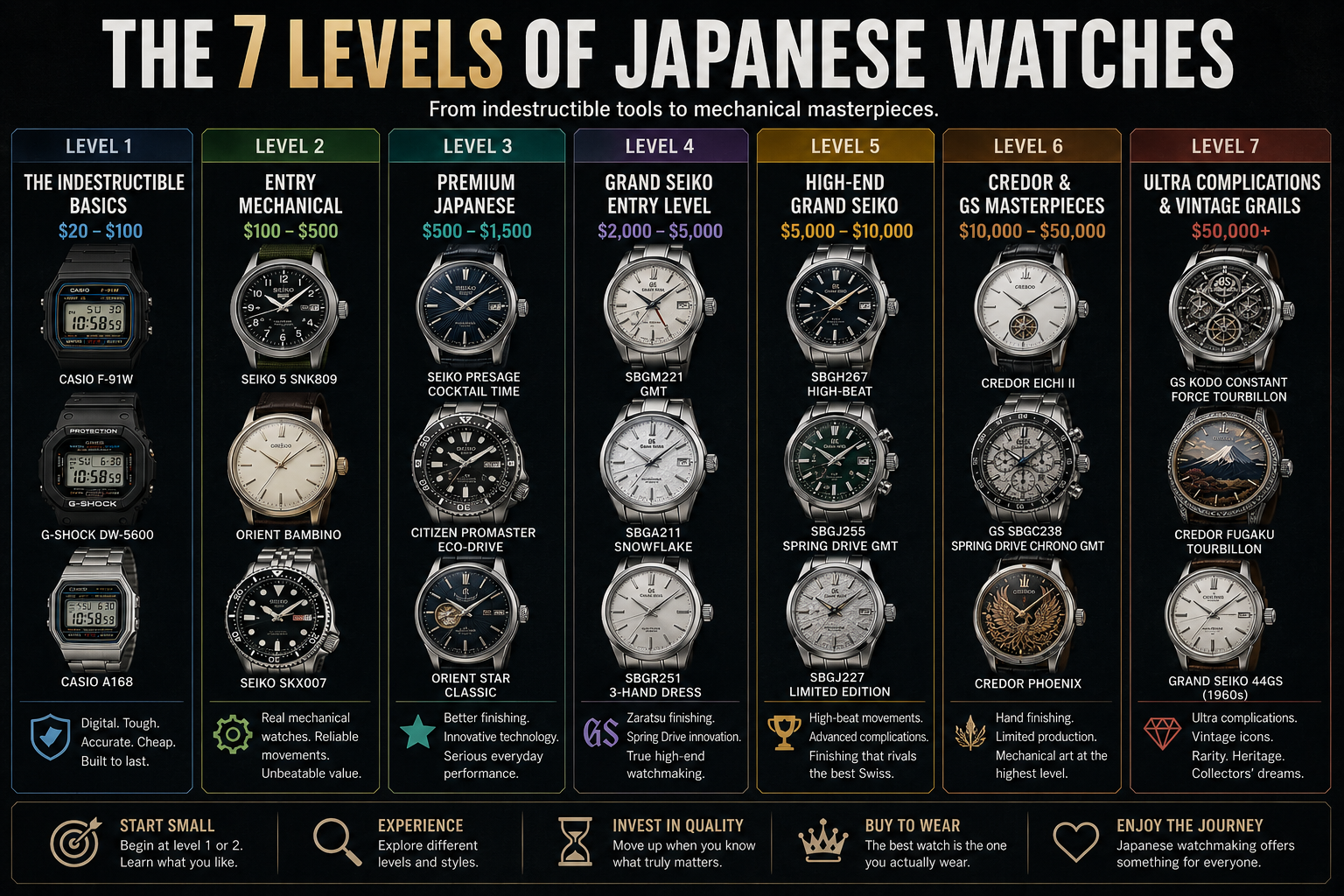
Most people have no idea what they are missing. The difference between a $30 Casio and a $30,000 Grand Seiko has almost nothing to do with telling time and everything to do with understanding what Japanese watchmaking actually is. These are the seven levels of Japanese watches. apanese Watches By the end of this, you will know exactly where the value lives, where the diminishing returns hit, and why collectors who own Patek Philippe still keep a Seiko in their rotation.
Level One — The Indestructible Basics ($20 to $100)
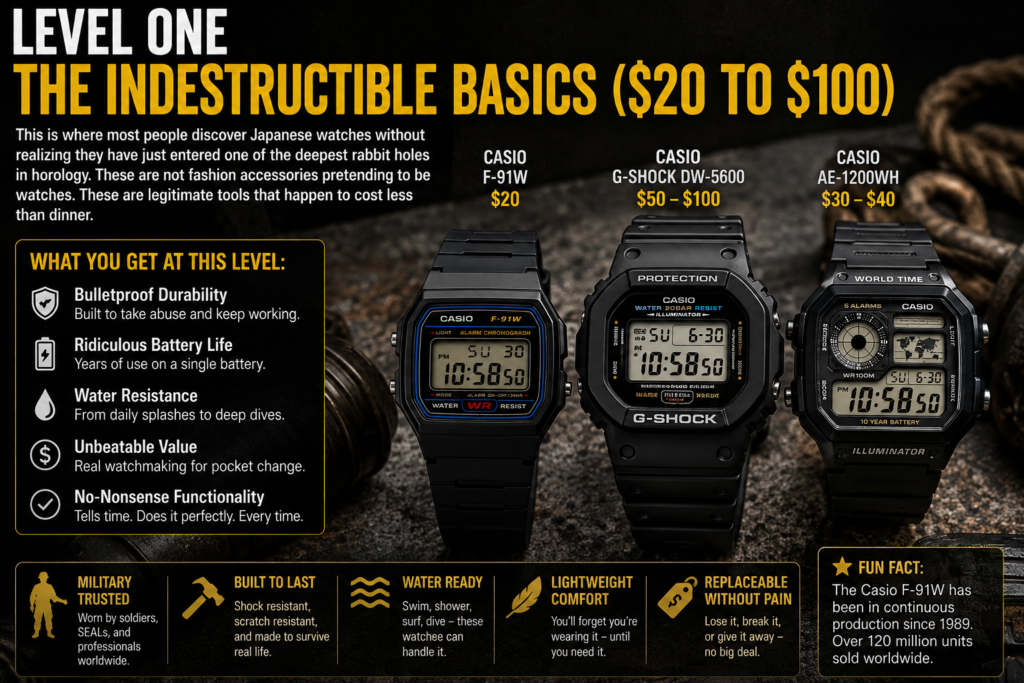
This is where most people discover Japanese watches without realizing they have just entered one of the deepest rabbit holes in horology. A Casio F91W on a gas station rack. A G-Shock you grabbed because it looked cool. A basic digital Casio your dad wore in the 1980s that still runs perfectly today. These are not fashion accessories pretending to be watches. These are legitimate tools that happen to cost less than dinner.
The Casio F91W is the most important watch at level one and possibly the most important watch in this entire breakdown. It costs around $20. It has been in continuous production since 1989. apanese Watches Navy Seals have worn it on missions because it is lightweight, does not reflect light, runs for seven years on a single battery, and costs so little that losing one does not matter.
Level Two — Entry Mechanical Watches ($100 to $500)
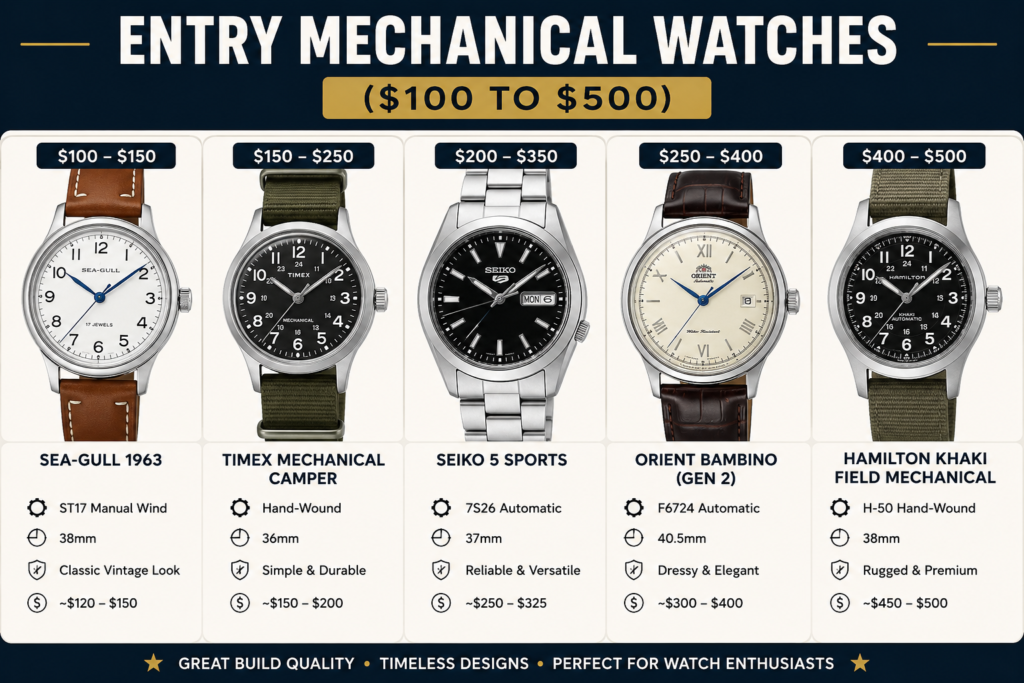
This is where Japanese watches stop being tools and start becoming objects you genuinely care about. Seiko and Orient built this category and have dominated it for decades. The Seiko 5 series, the Orient Bambino, the Seiko SKX007 and its descendants are legendary among enthusiasts.
The Seiko 5 SNK809 is the gateway drug. Around $100 for an automatic watch with a see-through case back, a reliable movement, and a design that does not pretend to be anything other than what it is. These are workhorse watches refined over decades.
Level Three — Premium Japanese Watches ($500 to $1,500)
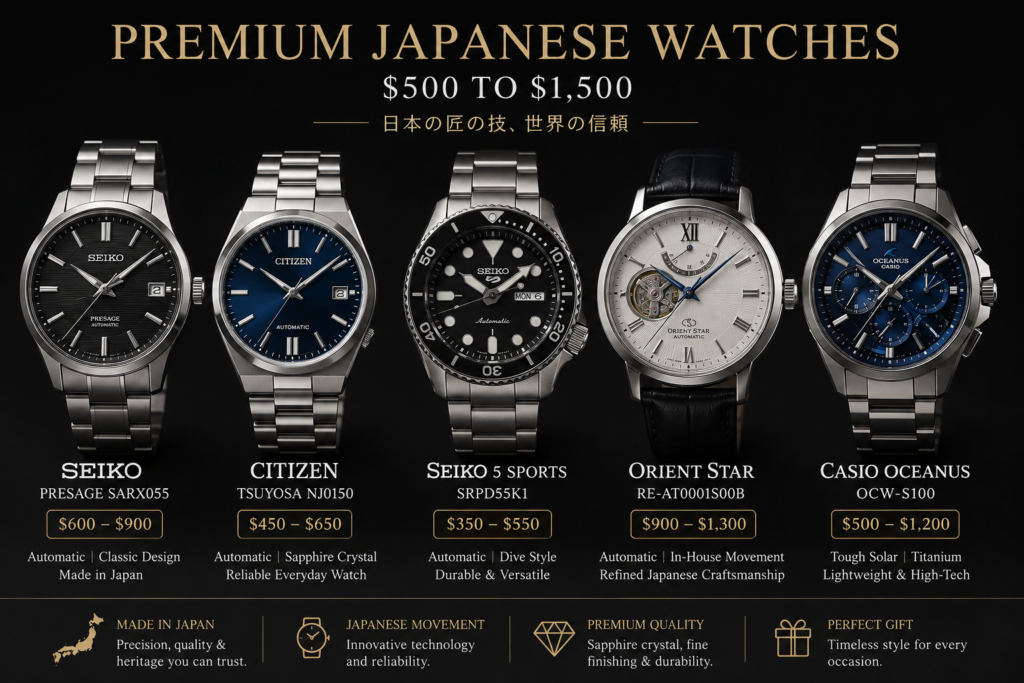
This is where Japanese watchmaking starts flexing. Seiko Presage, Citizen Eco-Drive, and Orient Star begin embarrassing Swiss competitors costing twice as much.
The Seiko Presage Cocktail Time is the icon here. What you get is one of the most beautiful dials in watchmaking. Multiple layers of lacquer create a sunburst effect with incredible depth and texture.
Level Four — Grand Seiko Entry Level ($2,000 to $5,000)
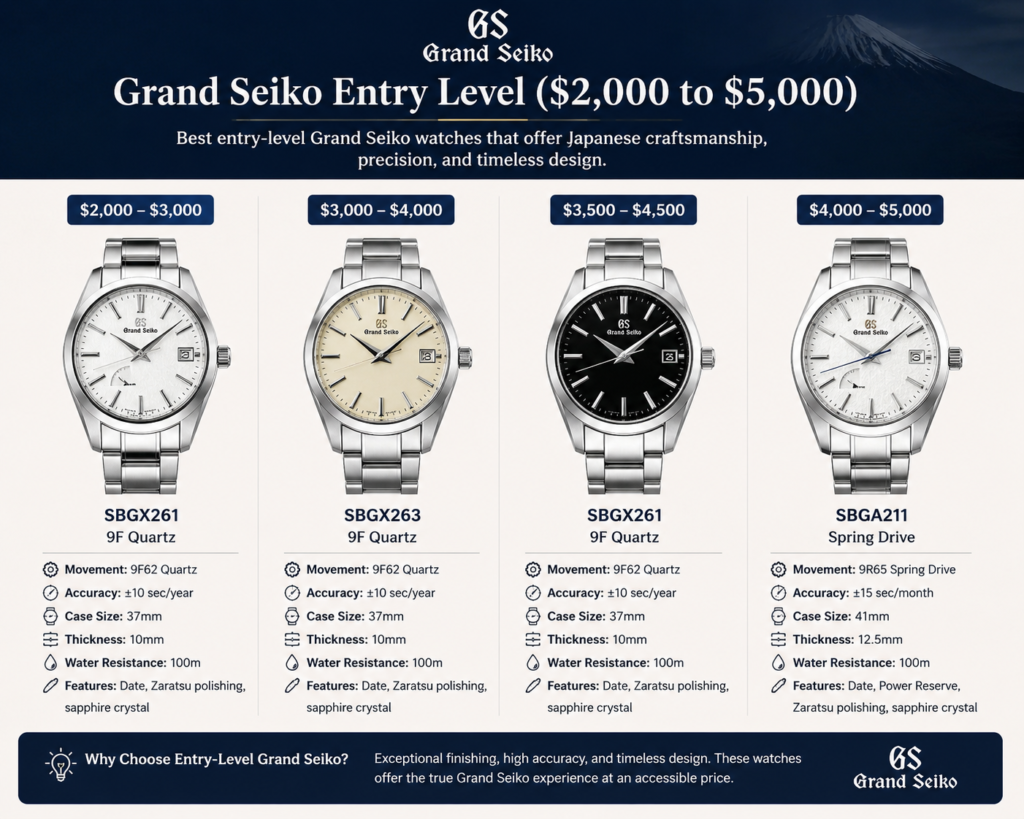
This is where everything changes. Grand Seiko is not an affordable alternative to Swiss luxury. apanese Watches It is a legitimate high-end watchmaker.
The Grand Seiko SBGA211 Snowflake is the Spring Drive icon. Around $5,000 and powered by one of the most unique movements in watchmaking. The smooth sweeping seconds hand alone feels magical in person.
Level Five — High-End Grand Seiko ($5,000 to $10,000)
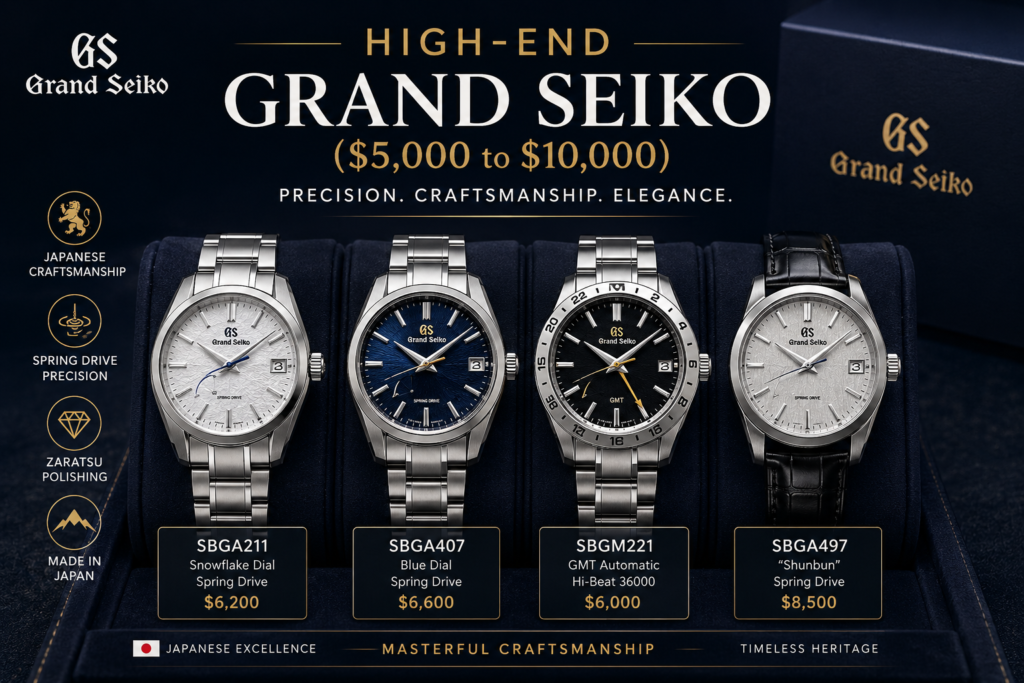
Here Grand Seiko stops holding back. High-beat movements, advanced GMT complications, and extraordinary finishing place these watches directly against Rolex and Omega.
The Grand Seiko SBGH267 is the high-beat flagship. Every bracelet link, clasp, and polished surface receives obsessive attention to detail.
Level Six — Credor & Grand Seiko Masterpieces ($10,000 to $50,000)
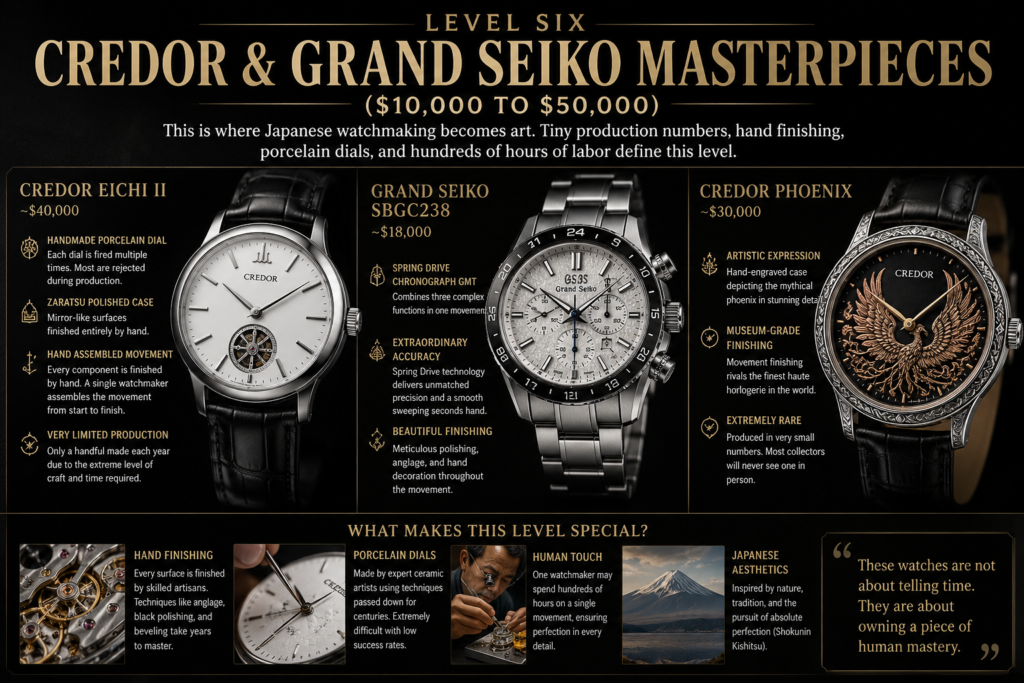
This is where Japanese watchmaking becomes art. Tiny production numbers, hand finishing, porcelain dials, and hundreds of hours of labor define this category.
The Credor Eichi II is the icon. Every dial is handmade and fired multiple times. Most are rejected during production because perfection is the standard.
Level Seven — Ultra Complications & Vintage Grails ($50,000+)
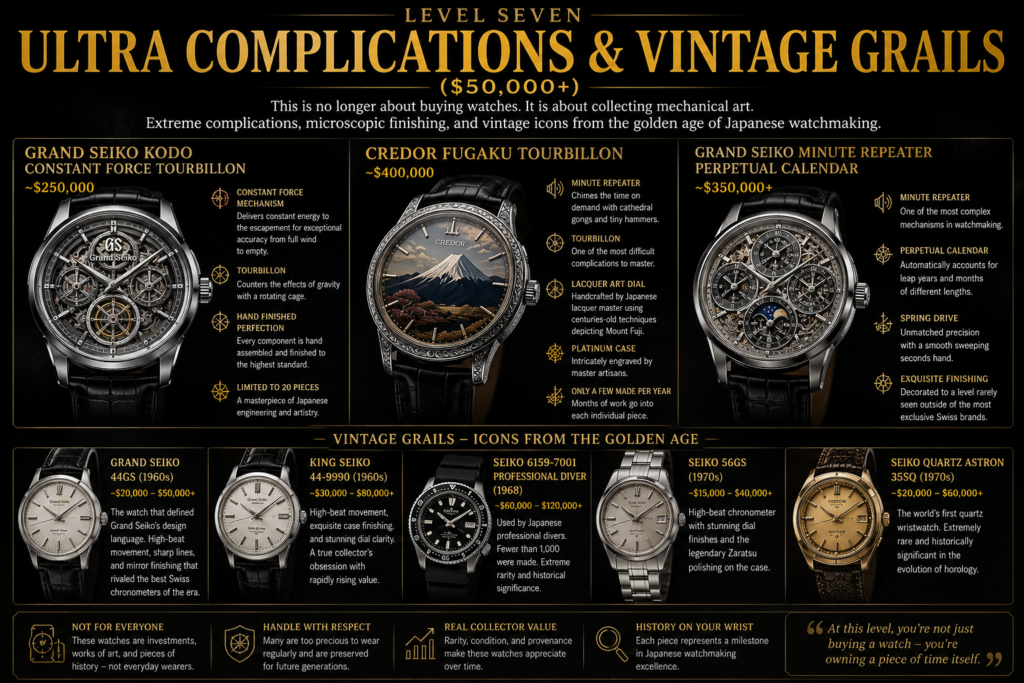
This is no longer about buying watches. It is about collecting mechanical art.
The Grand Seiko Kodo Constant Force Tourbillon represents the absolute peak of Japanese watchmaking. Combining a tourbillon with a constant-force mechanism is one of the hardest challenges in horology.
Final Thoughts — Where the Real Value Lives
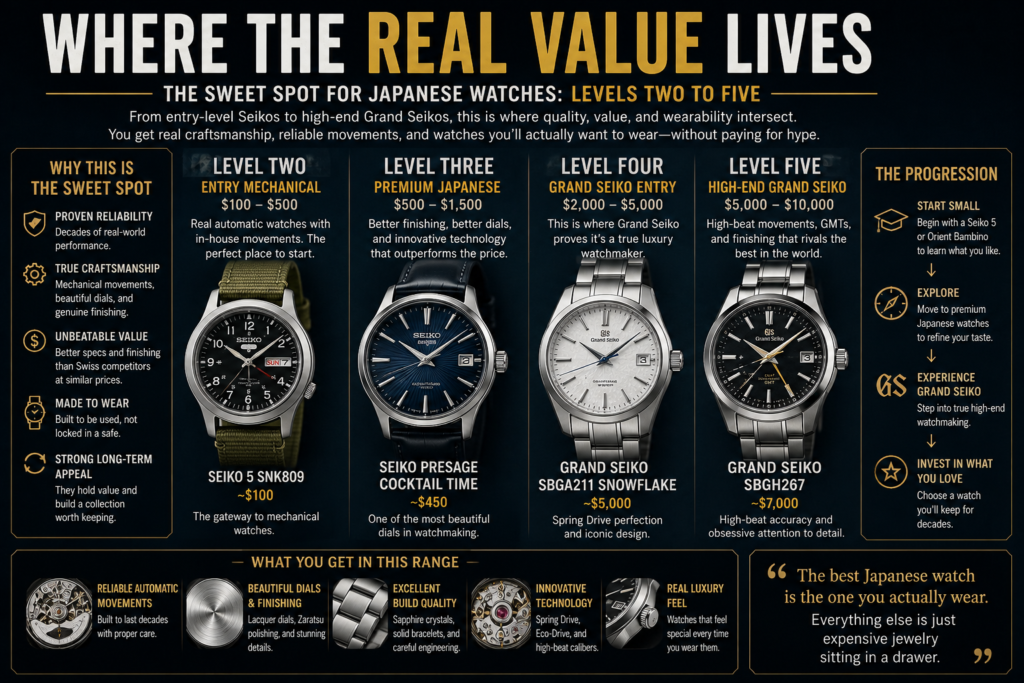
The sweet spot for Japanese watches lives between levels two and five. From entry-level Seikos to high-end Grand Seikos, this is where quality, value, and wearability intersect.
The best Japanese watch is the one you actually wear. Everything else is just expensive jewelry sitting in a drawer.